
The Problem
For more than a decade, communities across Cameroon’s North-West and South-West Regions have lived under the shadow of armed conflict. Thousands of families have been torn apart. Schools have been destroyed. Livelihoods have disappeared. Entire communities continue to live with fear, trauma, and uncertainty.Yet behind every statistic is a young person whose dreams have been interrupted.
They have witnessed killings, lost family members, dropped out of school, and seen their opportunities disappear. With few economic options and little psychosocial support, many become vulnerable to recruitment by armed groups, criminal networks, or other forms of violence.
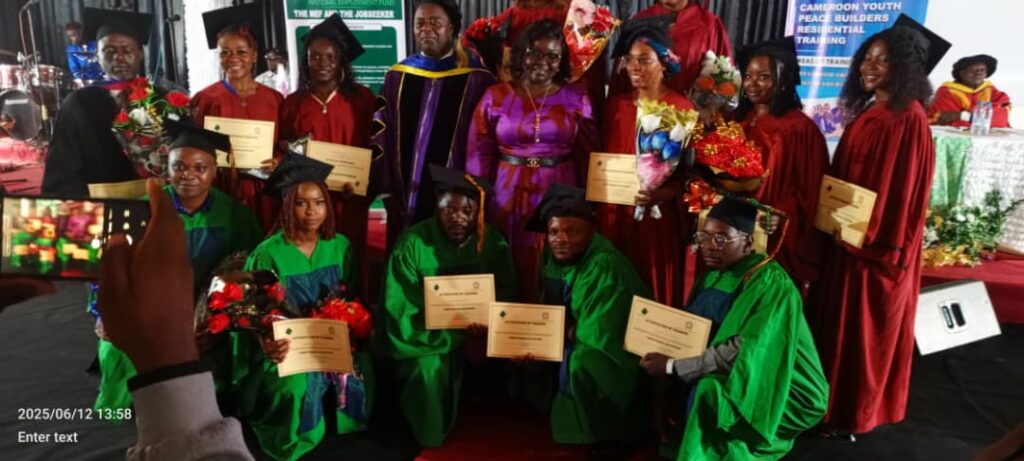

The Solution
While the residential model is essential for the most traumatized and vulnerable youth, the non‑residential program offers a flexible, community‑based approach that reaches a wider group of young people who may not require intensive daily psychosocial care but still face unemployment, displacement, and exposure to violence.
1. Accessibility and Inclusion
Many youth cannot leave their families or communities due to responsibilities, displacement, or financial constraints.
A non‑residential program allows them to access training while remaining at home, making participation more inclusive.
2. Community Integration
By staying in their communities, participants immediately apply peacebuilding and livelihood skills in real‑life contexts.
This strengthens local resilience and ensures that the benefits of training ripple outward to families and neighbors.
3. Cost‑Effectiveness and Scalability
Non‑residential training requires fewer resources for accommodation and daily care, making it more cost‑effective.
This model can be scaled to reach larger numbers of youth across multiple communities.
4. Balanced Psychosocial Support
While not as intensive as the residential program, the non‑residential model still provides counselling, mentorship, and trauma‑healing sessions.
Youth receive structured support without being removed from their social environment, which helps normalize peace practices in everyday life.
5. Immediate Livelihood Impact
Participants continue to live in their communities while learning vocational and entrepreneurial skills.
This allows them to start small businesses or income‑generating activities during the training period, reducing vulnerability to violence and dependency.
6. Complementarity with Residential Program
The non‑residential program complements the residential model by serving youth who are moderately affected by conflict but still need empowerment.
Together, both models ensure that no youth is left behind—those requiring intensive healing are cared for in residence, while others are trained and supported within their communities.